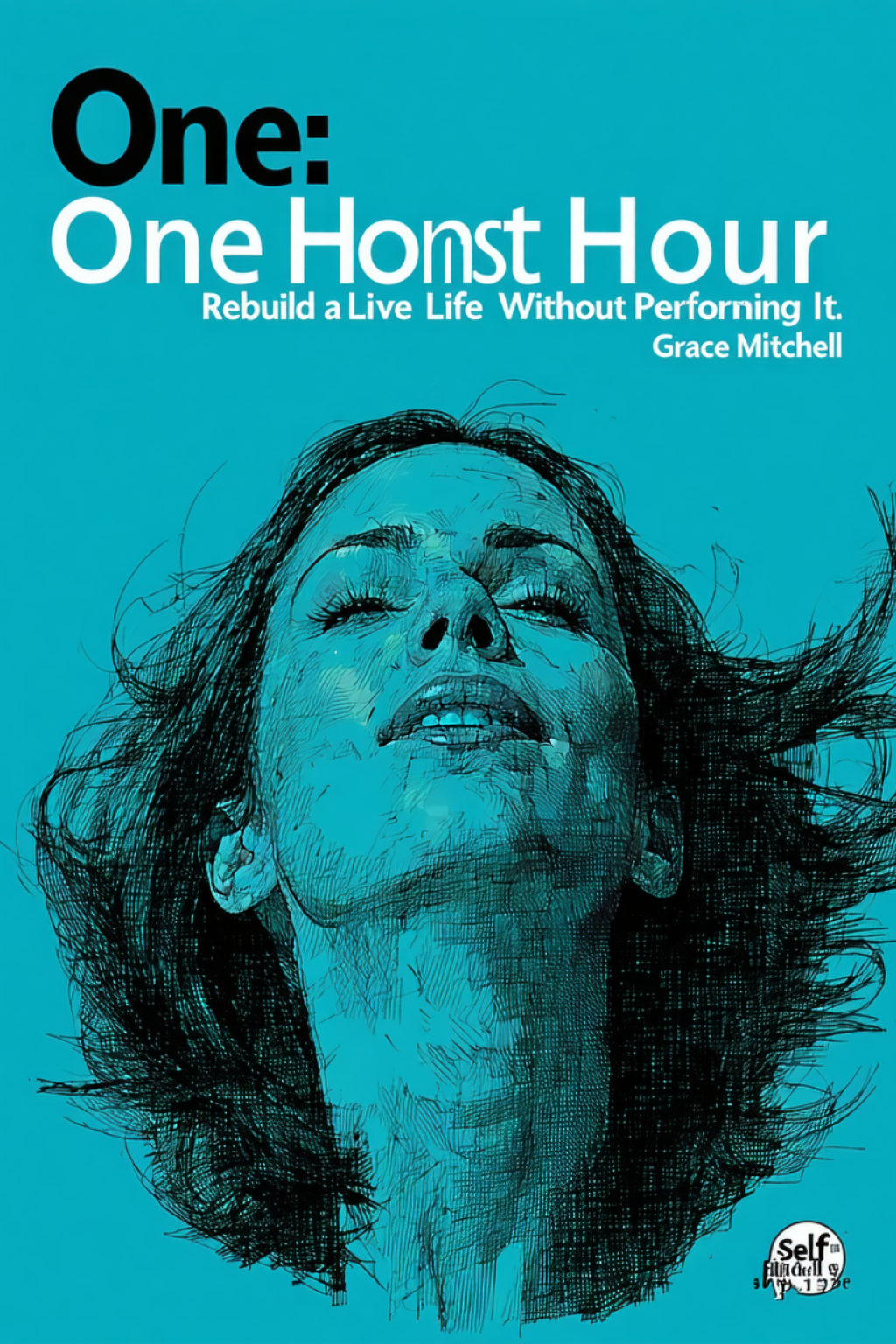
The Thing Left Unsaid
the reader arrived in any city that never sleeps just before dawn, carrying less luggage than a person should carry when they intend to stay. The air had the particular smell of a place that remembers you even when you have practiced forgetting it. Grace Mitchell would later write that the story began not with a crime or a confession, but with a small wrongness: a notebook with only one rule waiting where it had no honest reason to wait.
a kitchen table at 6 a.m. held the kind of quiet that is not peace. A kettle clicked. A floorboard answered a footstep one second too late. the reader set a notebook with only one rule on the table and refused to look away from it, as if attention itself could keep the truth from slipping. a trusted friend spoke first, voice low, the way people speak when they have decided not to be overheard.
"If you keep asking," a trusted friend said, "someone will answer. They will not answer kindly."
"I am not asking for kindness," the reader said. "I am asking for the version that does not require me to lie to myself."
Outside, any city that never sleeps performed its daily competence: buses, shutters, the ordinary bravery of people going to work. Inside the story, a different economy was running. the habit of performing competence had already begun to apply pressure in polite forms: a delayed permit, a missing file, a warning dressed as concern. the reader recognized the technique. Power rarely shouts at the beginning. It rearranges the furniture until you trip.
They walked the long way to a kitchen table at 6 a.m., not because it was safer, but because the direct route felt observed. the reader catalogued details the way a careful person does when memory may later be disputed: the stain on the brick, the clock that was three minutes fast, the woman who looked at a notebook with only one rule and then looked through it. The city was full of people practicing not-seeing. That, too, was a kind of skill.
the reader remembered a smaller version of this fear from years ago: a classroom, a kitchen, a hallway where an adult had said, "Don't make trouble." The advice had sounded like love. It had functioned like a lock. In any city that never sleeps, the same sentence still traveled well.
At a kitchen table at 6 a.m., the confrontation did not arrive as a speech. It arrived as a choice. A drawer that should have been locked was open. A name had been written, then written over. the reader understood, with a clarity that hurt, that progress begins when the performance stops. Knowing it did not make the next action simple. Knowing it only removed the comfort of ignorance.
a trusted friend waited by the window. "We can still leave it," a trusted friend said. "Plenty of people do."
"And then what?" the reader asked. "We become one more quiet room in any city that never sleeps?"
There was a moment, almost comic, when a notebook with only one rule looked ordinary. That is how dangerous things survive. They borrow the appearance of paperwork, of family, of routine. the reader had to keep looking until the ordinary surface thinned.
the habit of performing competence entered the scene without needing to hurry. That was the tell. People who are innocent of a system still show surprise. the habit of performing competence showed management. "You are making this larger than it is," the habit of performing competence said, as if scale could be negotiated. "There is a responsible way to handle delicate matters."
"There is a responsible way to hide them," the reader answered. "I have seen both. They use the same vocabulary."
The writing stays close to the body: the heat in the palms, the taste of metal in the mouth, the way a room changes temperature when a secret is spoken. Dialogue is allowed to be incomplete. People in any city that never sleeps rarely finish the dangerous sentence. They let the listener assemble it, which is how a community shares guilt without ever signing it.
Rain found the streets and made them honest. Reflections doubled every light. the reader walked through any city that never sleeps as if the city were an argument that could still be won by paying attention. a kitchen table at 6 a.m. waited at the end of that argument, neither sanctuary nor trap until someone chose. The chapter uses this pause the way a good novel does: not as filler, but as the place where the reader decides what kind of person to be when the next door opens. There are 6 movements in this book, and this is the one that cannot be skipped.
The chapter closed on motion, not arrival. the reader left a kitchen table at 6 a.m. with a notebook with only one rule and a clearer map of the danger. the habit of performing competence would not forget this hour. Neither would any city that never sleeps. Tomorrow would ask for a more expensive kind of courage, and One Honest Hour would have to earn its next page the hard way: one decision that could not be taken back.
By the end of "The Thing Left Unsaid", the plot has moved. arrival and the first wrong detail is no longer a rumor. It is a fact with consequences. the reader understands more than at the start of the chapter and is therefore less safe. That is the contract of this book: every gain in knowledge extracts a price, and the reader is asked to stay with the reader while the bill comes due.