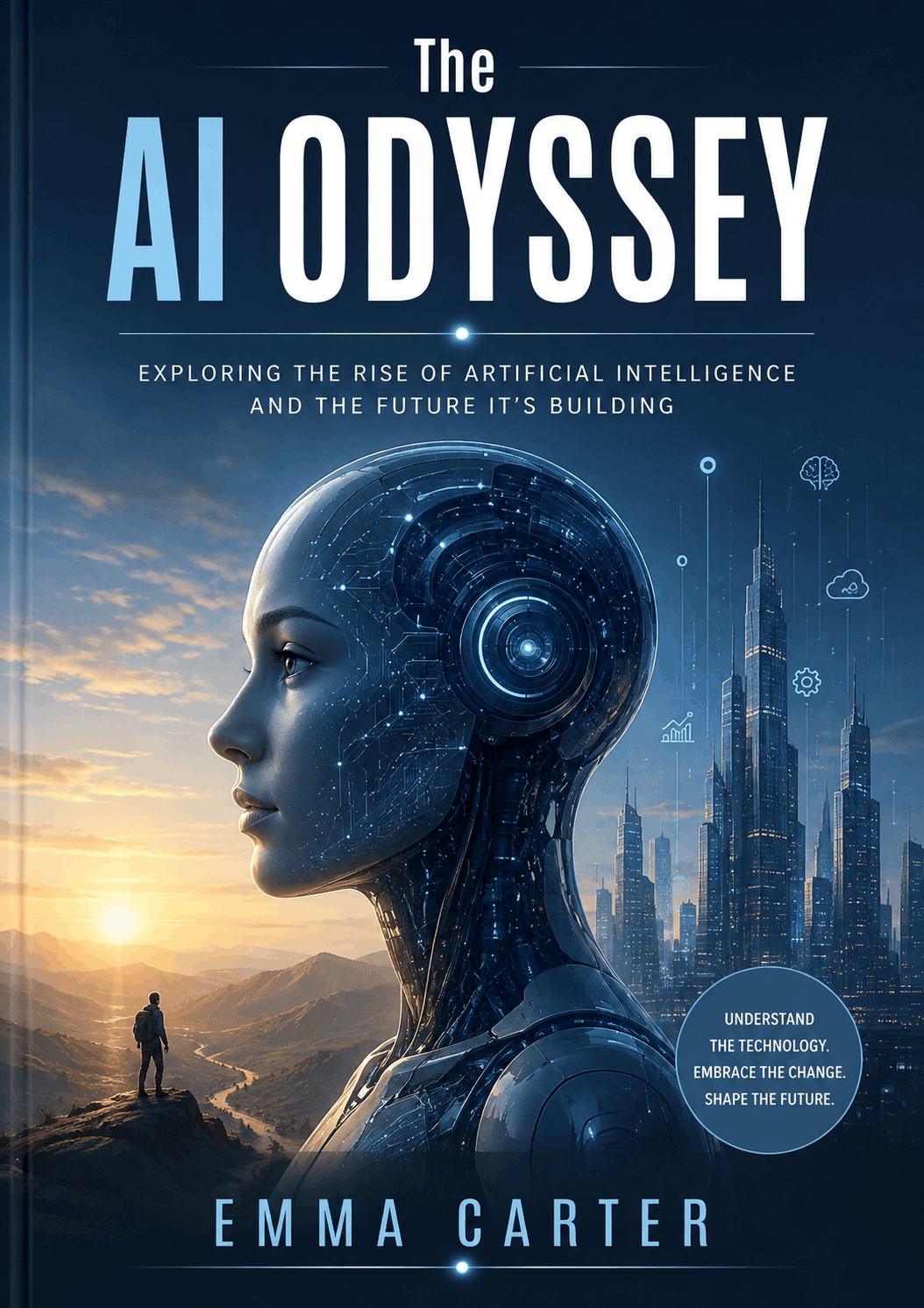
From Rules to Worlds: The Rise of AI
The fluorescent hum of the Odyssey lab pulsed like a heartbeat. Screens flickered, displaying a simple cartoon of a chicken sprinting down a racetrack – the first visual cue of a world model in motion. Maya Patel, the Innovator behind the venture, watched the simulation unfold, her eyes reflecting the electric teal of the code.
“Imagine a mind that can run every possible scenario, like that chicken, but on a planetary scale,” she whispered to her colleague, Arun, who was calibrating the latest version of Odyssey‑2. The room smelled faintly of ozone and coffee, a blend that had become the scent of discovery.
Three decades earlier, artificial intelligence was a collection of rule‑based systems—if‑then statements that could play chess or sort mail. Those early programs were clever, but they were shackled to the narrow corridors their creators built. Maya remembered the stories her grandfather told about “expert systems” that could diagnose a car’s engine but stumbled when the problem fell outside a predefined tree.
The turning point arrived when researchers began to teach machines to learn from data, not just from hard‑coded logic. Neural networks, inspired by the brain’s architecture, gave rise to deep learning. The world watched as a computer identified a cat in a photograph with uncanny accuracy. Yet those models were still confined: they recognized patterns but could not imagine the future.
Odyssey’s breakthrough lay in what the lab called “world modeling.” Instead of merely recognizing a cat, the system built a mental replica of the environment—a sandbox where every object, law of physics, and human intention could be simulated. The chicken on the racetrack was more than a novelty; it was a proof that an AI could predict the outcome of countless variables in real time.
Maya recalled the night the funding round closed. Investors from Silicon Valley and Europe gathered in a sleek conference hall, their faces lit by a massive screen showing the Odyssey simulation. The presenter clicked, and the chicken burst across the track, its path altered by a sudden gust of wind. “We have just taught an algorithm to understand cause and effect,” Maya announced, her voice resonating like a cinematic climax. The room erupted, and a $310 million Series B round was secured.
Beyond the lab, the ripple effects were already palpable. Small businesses began to adopt Odyssey’s workflow automation suite. Samira Khan, the owner of a boutique eco‑fashion label, had integrated a single AI tool that analyzed social media trends, suggested fabric sourcing, and generated product descriptions in seconds. Her sales dashboard lit up like a constellation, each spike a testament to AI’s quiet power.
Yet the rise of such capability also drew shadows. The Societal Watchdog, Senator Elena Torres, had just introduced a hearing on algorithmic transparency. She questioned whether a system that could model entire economies might also conceal biases or manipulate markets. “We must ensure the same transparency we demand of our elected officials applies to these digital minds,” she declared, her words echoing through the marble chambers.
The chapter of rule‑based beginnings had closed, and the world now stood at the threshold of a new era—one where AI could not only react, but anticipate; not only process, but imagine. Maya looked at the racing chicken, then at the globe rendered in the simulation—a swirling mass of data points, cities, oceans, and human lives. The question lingered, hanging in the air like the final note of a symphonic overture: would humanity steer this force toward shared prosperity, or would it become a silent conductor of its own destiny?
In the quiet after the applause, Maya felt the weight of both possibility and peril. She turned off the display, the neon glow fading, and stepped out into the night. Above her, the city lights stretched like a circuit board, each bulb a node in a network that was only just beginning to understand its own reflection.