Dust‑Veiled Beginnings
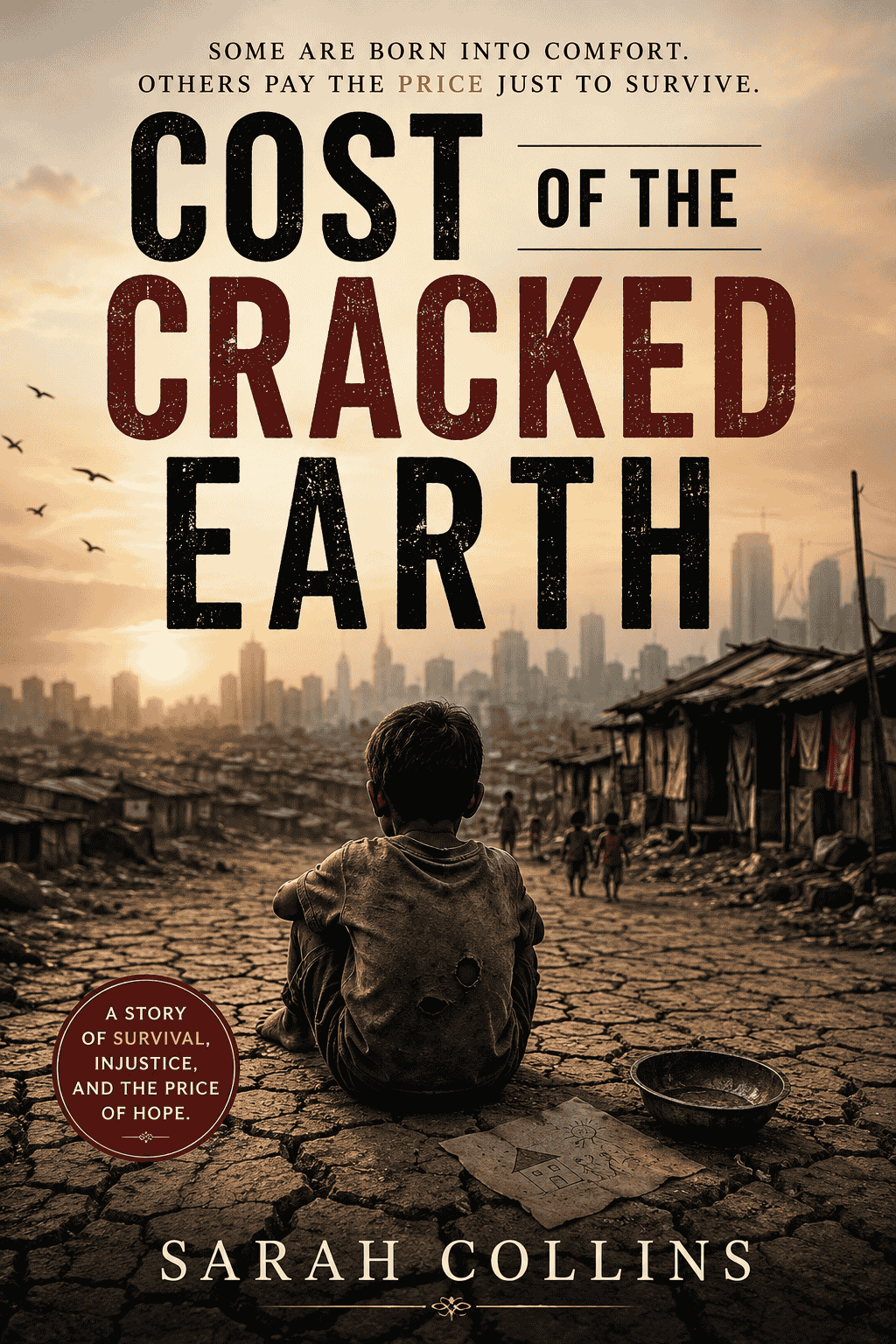
The sun rose over the cracked plain like a bruised fist, its light spilling across fissures that stretched farther than the eye could follow. Dust rose in thin, wavering columns, catching the early light and turning the air itself a muted gold. In the heart of the village, a single mud‑walled house clung to the slope, its roof sagging under the weight of time and neglect. Inside, the smell of dry earth mixed with the faint, sour tang of sour milk left to sour in a cracked clay pot.
Samuel lay on a thin mat, his small body curled against the cold floorboards. His stomach growled, a low rumble that seemed louder than the wind that whistled through the cracked walls. Mara, his mother, shuffled in, her hands roughened by years of pulling weeds from parched soil and hauling firewood for a hearth that rarely caught flame. She carried a thin slice of flatbread, its crust hardened at the edges.
“Eat,” she said, voice hoarse but steady, placing the bread on a worn wooden plank. “It will keep you from the ache.”
Samuel took the piece, the grain gritty between his teeth. He looked up at his mother, noticing the thin lines that mapped her face like rivers across a desert. “Will there be more tomorrow?” he asked, the question hanging in the dust‑filled air.
Mara’s eyes flickered to the doorway, where Elder Kofi stood, his back bent with the weight of years and authority. The elder’s presence was a quiet storm; his gaze swept the village, measuring each exchange as if the cracked earth itself kept a ledger.
“The rain did not come,” Mara answered, her tone a blend of resignation and resolve. “We must give what we have to the well‑keepers.”
Samuel watched as Mara placed the bread on a low table, then turned to the elder. “We have two hands and a child’s hunger,” she said, “but the well asks for firewood and a day’s labor.”
Elder Kofi nodded, his voice low and measured. “The earth does not give freely. It takes what it needs in return. Bring the firewood by sunset, and the water will flow for the night.”
The words were simple, yet each syllable carried the weight of a system that turned survival into a ledger of debts. Samuel watched the firewood being stacked—dry, cracked branches that snapped under his small hands—while the elder’s gaze never wavered from the horizon, where the sky seemed to swallow the cracked land.
Later, as the sun dipped low and painted the sky in bruised purples, Samuel slipped outside, his bare feet sinking into the powdery dust. He found Jabari, his friend, crouched beside a broken wall, his eyes fixed on a small, half‑buried stone. The two boys shared a silence that spoke of hunger, of cracked walls, of a world that demanded a price for every breath.
“What do you think the price is, Sam?” Jabari asked, his voice barely a whisper.
Samuel stared at the horizon, where the sun’s last rays turned the cracks into glowing veins. “I think it’s everything we have left,” he said, the words forming a promise and a warning.
That night, the house trembled as the wind howled through the gaps in the roof. Mara wrapped a thin blanket around Samuel’s shoulders, her fingers lingering on his cheek. “One day,” she murmured, “you will see why the earth cracks and why we must learn to mend it.”
Samuel closed his eyes, the creak of the house and the distant chant of the villagers bartering for water echoing in his mind. In the darkness, a seed of curiosity took root—a question that would grow louder with each sunrise: what cost lay hidden behind every need, and who decided that price?
The night settled, dust settling like ash over the village, and Samuel dreamed of a world where the cracked earth could yield without demand, where a child’s stomach would not echo with hunger, and where the walls of his home would stand firm against the wind. In the dim glow of the moon, the promise of hope flickered, fragile yet unextinguished, waiting for a mind brave enough to uncover its price.
